 |
| |Source=Derived from File:Us declaration independence.jpg |Author=Thomas Jefferson |Date=1776 |
In every society from the dawn of time, some have been considered to have more worth than others. How we define who is worthy has changed, and varies from society to society, and how the worthy and those less worthy are treated also varies, but we have always it seems placed worth on the lives of others.
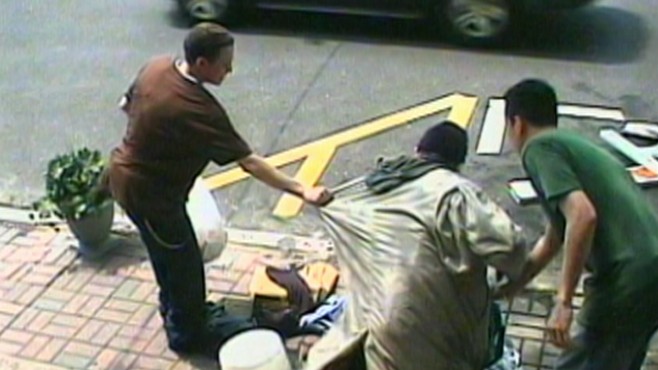
In California a woman is sleeping and a man buys some alcohol, walks up to her pours it over her and sets her on fire (woman set on fire as she sleeps). I have changed the story a little from how it is typically reported, in most stories it is noted that she is homeless, now the man who did it is being called mentally ill.
It seems to me that those labels have the effect of distancing the reader from both people. It distances us from the victim (homeless) and from the perpetrator (mentally ill), and while many will feel horror for this crime, few will send cards or donations to any family she had or other homeless people, few will have candle light vigils for her, few will call for legislation to address the violent crime against the homeless.
It is a pity, because I was shocked at the statistics and the number of people set on fire (mostly by people with homes) who happened to be homeless:
What is also disturbing is that 50% of those that committed these crimes were under the age of 20. Those that attacked the vulnerable assumed that they would not be caught or severely punished, because those that they attacked were not as worthy as others in our society. They assumed it was OK to harm these people because their lives were not seen as worthy as the lives of others, simply because these people were poor and did not own aOver the past twelve years (1999-2010), advocates and shelter workers around the country have received news reports of men, women, and even children being harassed, kicked, set on fire, beaten to death, and decapitated. From 1999 through 2010, in forty-seven states, Puerto Rico and Washington, DC, there have been one thousand, one hundred eighty-four acts of violence committed by housed individuals, resulting in three hundred twelve deaths of homeless people and eight hundred seventy-two victims of non-lethal violence (http://www.nationalhomeless.org).
home.
A man pushes another man on the rails as a subway train enters the station (http://www.nypost.com/). It is unclear what led to the man being pushed on the rails, but it really does not matter, nothing short of self defense against a mortal attack would be justifiable. The initial stories portray the victim as a sort of hero, protecting other passengers from a deranged, homeless man. However, it is also possible that the victim was the aggressor in the situation. Neither scenario should make the victim any less of a victim, any less deserving of our sympathy. Nobody deserves that kind of death. Some make a point of mentioning that he was a father, does that imply that had he not been a father, he would have somehow been less deserving of our sympathy?
In a story more recent story of a similar nature a woman pushed a man in front of a moving train because she thought he was Muslim. In this case the man simply was in the wrong place at the wrong time and was targeted because he looked Muslim. His life was worth less in her eyes because he was Muslim.
Even with the coverage of the Sandy Hook tragedy I had to wonder what people meant when they noted that 'these kids did nothing wrong', does that mean that somewhere there are kids who have 'done something wrong' and thus deserve to die? Apparently so, as there are poor and brown kids dying every day from gunshots and people don't really seem to care. Many of these kids are just bystanders caught up in the deadly gunfire that they deal with every day. Are they not innocent? Do they not deserve better? If not, why not, are then not 'our' children too?

 The US media and many in the US were riveted to the story of Caylee Anthony (http://en.wikipedia.org/wiki/Death_of_Caylee_Anthony), a child clearly deemed worthy of our attention, I have to wonder if the story of Jade Morris will be deemed worthy of our attention? (http://www.huffingtonpost.com/). Somehow I doubt it and am very saddened that I am that cynical.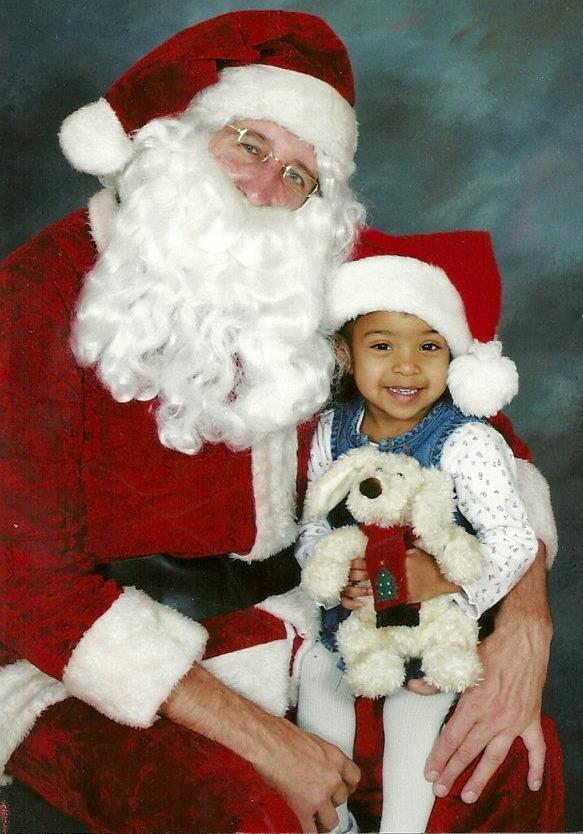
Most religions also urge us to take care of the same groups and yet, in most societies, those are the same groups that most often are judged as less worthy of love, care, attention and companionship.
It is clear that the US yearns to treat all as the same, many who come from abroad see and admire what the US has achieved through the spilt blood of all her children of all colors.

And even when I get dispirited by the stories I read, I often recall this group of kids that I saw when I visited Ellis Island and have to admit that if any country wishes to reach the ideal of all being created and treated equally, the US has to be counted at the top, even if clearly we are not quite there yet.
But I believe that they are all equally worthy, regardless of where they came from, what their religion is, what their gender, or sexual orientation is. They represent what so many have died for all over the world.


No comments:
Post a Comment